What Political Economy Is, and Why It Matters
What Political Economy Is, and Why It Matters
The work is public. Support keeps it possible.
What Political Economy Is, and Why It Matters
Most of us are taught to speak about the economy as if it were a machine. It grows. It slows. It overheats. It cools. It corrects itself. We speak as if it sits above the country and moves by its own laws and answers to no one. But the economy is not the weather. It does not happen to us. People make it.
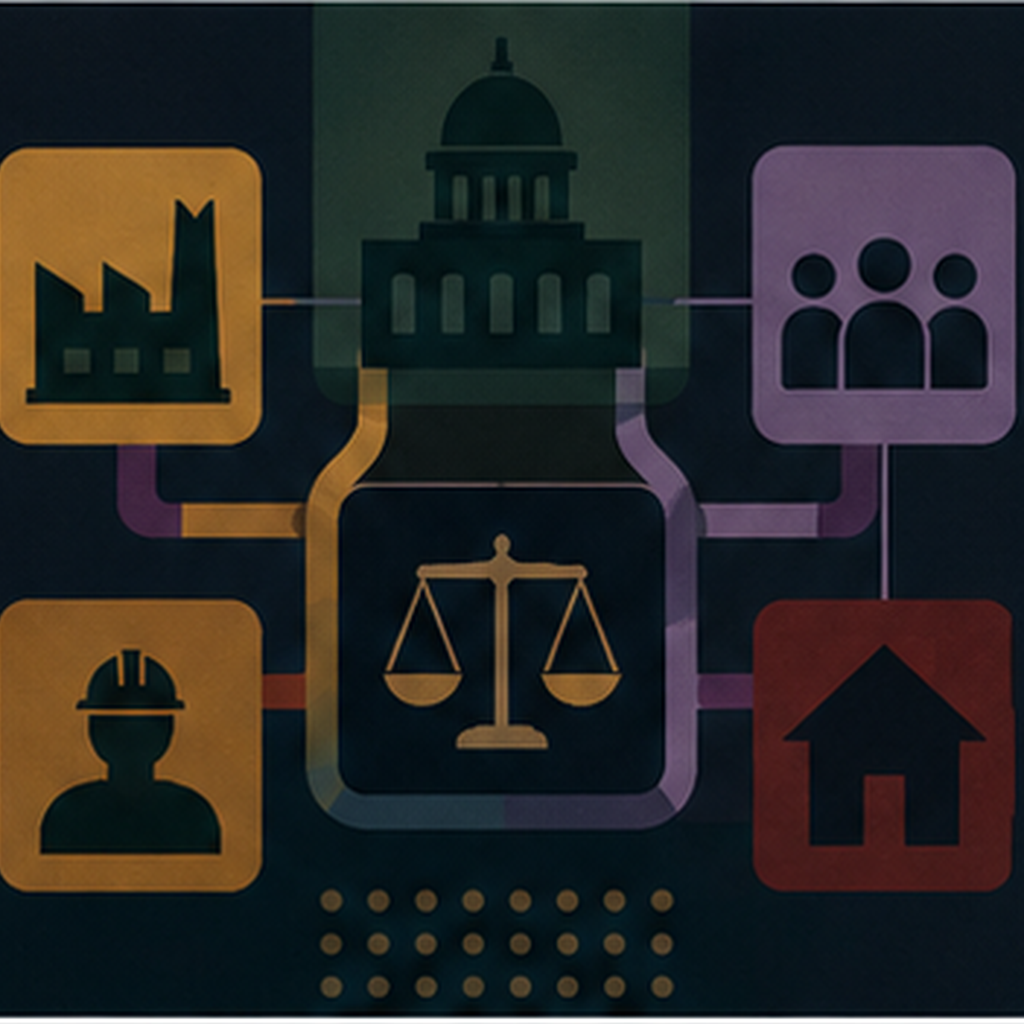
They make it with laws and budgets and banks and courts. They make it with taxes and trade rules and labour rules and property rights. They make it with what the state allows and what the firm demands and what the worker can refuse and what the family must absorb. They make it with what a country learns to call normal. Political economy begins here. The economy is part of society. It is not above it.
Political economy asks how politics shapes the economy and how the economy shapes politics in return. The question changes how you see almost everything. A tax law is not only an economic measure. It is a decision about who carries the country. A wage is not only a price. It is a measure of who can refuse and who cannot. A public budget is not only a spreadsheet. It is the record of what a society protects and what it neglects and who it expects to wait.
This matters because public debate keeps splitting things that belong together. Inflation is treated as a technical problem. But inflation enters the price of bread and the price of rent and the cost of the bus ride to work. Unemployment is treated as a statistic. But unemployment is also time and shame and dependence and the slow narrowing of a life. Growth is treated as the answer to every other question. But a country can grow and still become harsher. A society can grow richer in total while the ordinary day gets harder to live.
Political economy refuses to split money from power. It does not treat the market as a neutral room where everyone walks in with equal strength. People enter the market with different wealth and different debt and different schooling and different inheritance and different standing. Some can wait. Some must take what is offered. Some can move their money in a night. Others cannot move at all. These differences are not outside the economy. They are the economy.
Housing shows it plainly. A house is shelter. It is also an asset and a source of rent and a thing the bank will lend against and a thing the state will tax or protect. When the price of houses rises one family sees wealth and another sees exile. One household gains security and another loses the chance to live near work or near school or near anyone they know. The same number on the same chart is a victory for one class and a defeat for another.
Work tells the same story. A job is not only income. It is time and dignity and discipline and dependence and bargaining power. The question is not only what the worker earns. The question is what the worker can refuse. Can he leave the bad employer. Can he say no to the unsafe shift. Can he last a month without a wage. The textbook says wages are set by supply and demand. Political economy asks who shaped the supply and who holds the demand and who wrote the rules under which the two sides meet.
None of this means the market is useless or the state is always wise. That would be too easy and it would be false. Markets can build and coordinate. States can protect and invest. Both can also fail and exclude and punish and lie. Political economy is useful because it asks you to worship neither. It asks you to study the line between them and to judge the society that line creates.
The shape of this is old. Adam Smith wrote The Wealth of Nations and The Theory of Moral Sentiments side by side. He saw the market as part of moral life and not apart from it. The split came later. The split was a choice. The split was useful to the people the split protected.
The economy is not a machine above us. It is a human order around us. Prices have histories. Budgets carry values. Markets have rules. Rules have authors. Power leaves fingerprints. Once you learn to see the fingerprints it gets harder to speak about the economy as if no one made it and no one is answerable for what it does.