The Cost of a Smaller Deficit
The Cost of a Smaller Deficit
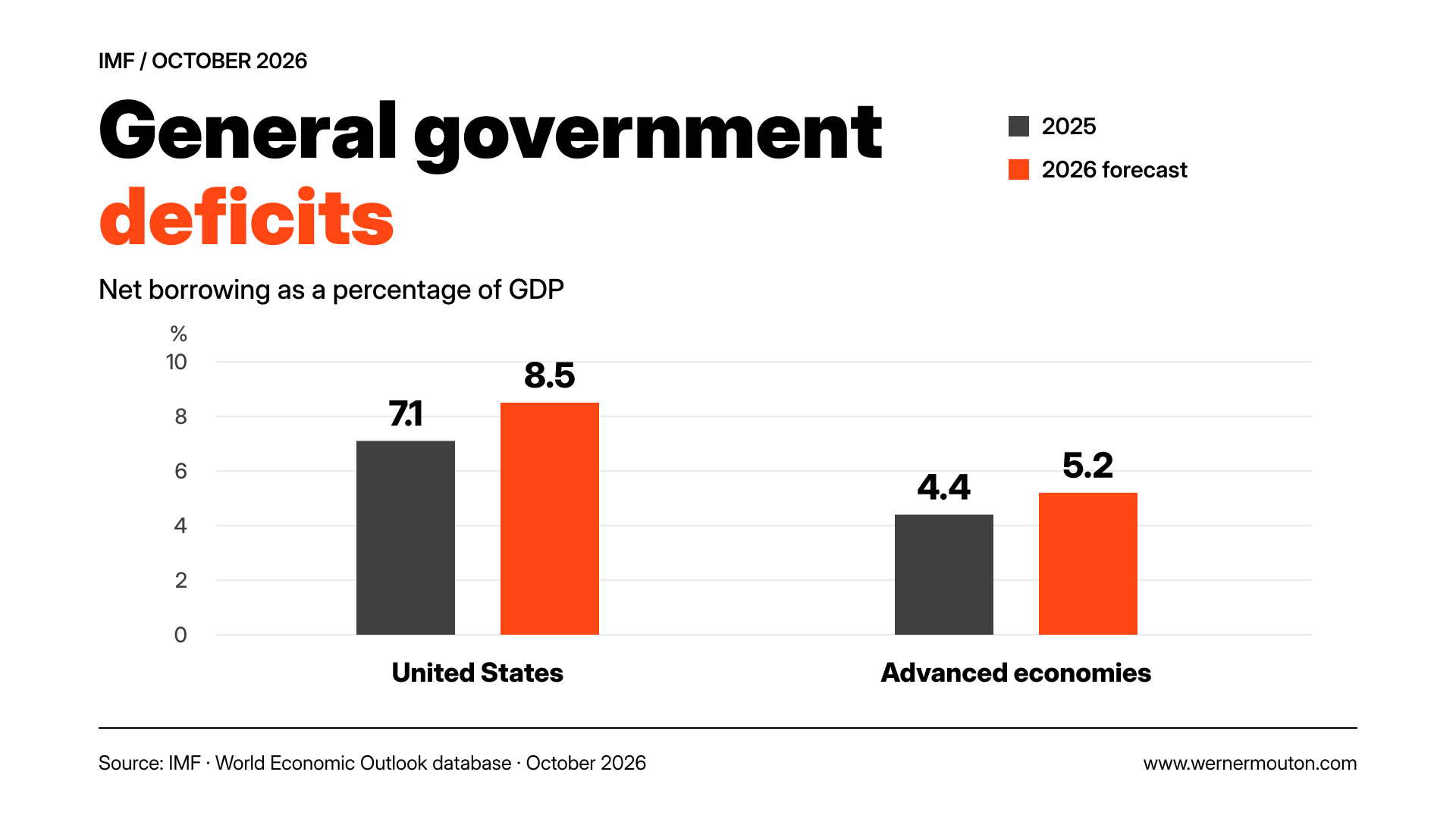
The IMF said on Tuesday, in its World Economic Outlook, that the United States will borrow 8.5 percent of GDP in 2026, up from 7.1 percent in 2025. Across the advanced economies the figure is 5.2 percent, the highest since 2021. The American number counts state and local governments alongside Washington. The Congressional Budget Office counts Washington alone and in February projected 5.8 percent. The boundary of the account comes before any argument about its size.
World Economic Outlook
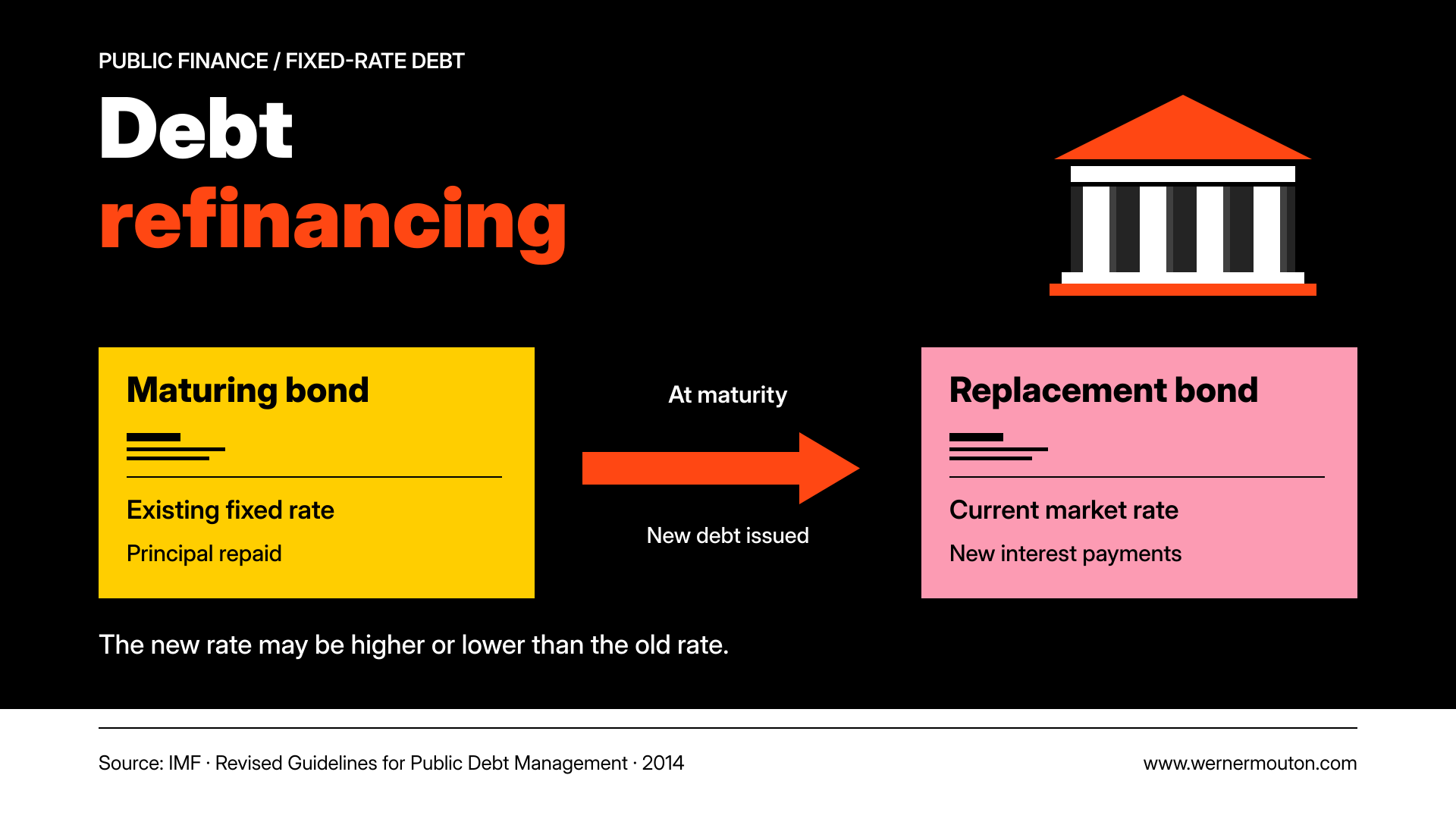
The argument begins with interest. Central banks in the United States, the eurozone and Japan have raised rates this year, and government borrowing costs have reached multi-decade highs. The bond sell-off worsened in September. Governments borrow to cover this year’s gap and to replace bonds that fall due, and each bond that rolls over now rolls over at the higher rate. The IMF expects global public debt to approach 100 percent of GDP later this decade. Interest competes with everything else in a budget. A dollar paid to past lenders is a dollar not spent on a clinic or a bridge, unless the government taxes more or borrows again. Decisions made years ago set limits on decisions made this year.
But 8.5 percent says nothing about what produced it. Borrowing can build railways and transmission lines. It can pay for tax cuts. It can also cover the revenue a weak economy fails to bring in, but the IMF forecasts American growth at 2.3 percent this year and next, so a slump explains little of the American gap. The same report raised Germany’s growth forecast by 0.6 points, to 1.3 percent, amid rising investment in infrastructure and defence. In a deficit table, a euro spent on a railway counts the same as a euro given up in tax cuts.
Debt Refinancing
The revenue side deserves the same scrutiny. A government can struggle to fund its commitments while private wealth stays lightly taxed. Whether that wealth can be taxed is a question of law and administration and political power, and it belongs inside the deficit argument.
Closing the gap has costs too. Cutting investment can slow growth. Cutting services moves costs onto households as fees and unpaid care. Raising taxes puts the burden on whoever the government chooses to tax. And the IMF warns that as fiscal costs rise and electoral pressure builds, central banks may face calls to tolerate inflation above target. Inflation shrinks the real value of the debt without a vote, and it shrinks the wages and savings that fail to keep pace.
So the IMF’s figure needs a second set of accounts: what the borrowing bought, who gained from it and who pays to shrink it. A government can cut the railway and report a smaller deficit. The fiscal balance will not show what the country lost.