Public Stock, Private Monarchy
Public Stock, Private Monarchy
Public Stock, Private Monarchy
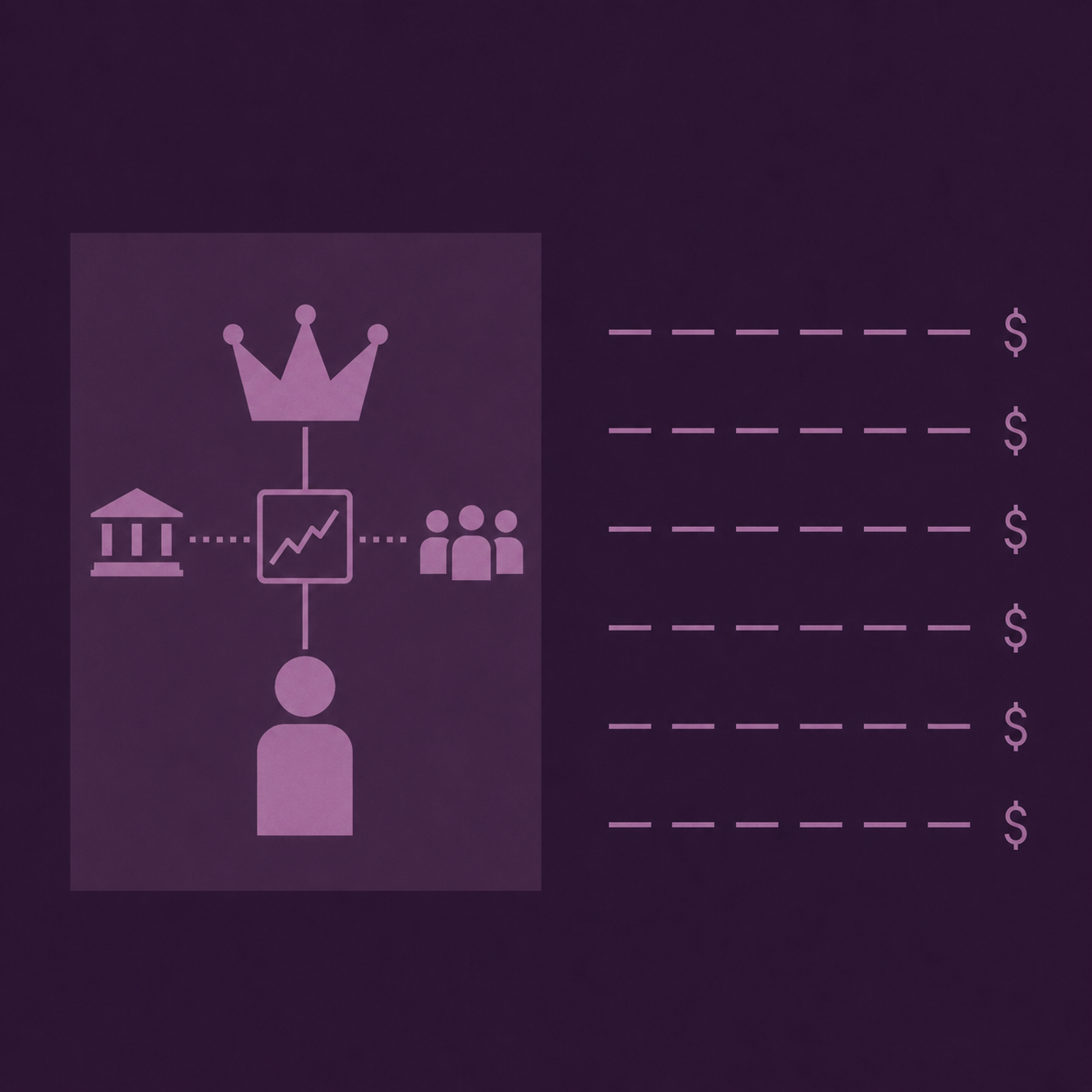
SpaceX offers a useful way to think about the strange new form of the public company. The issue is not only whether its valuation is too high, or whether investors are paying too much for the promise of rockets, satellites, Mars, defence contracts, and future technologies. The deeper issue is institutional. A company can enter the stock market, invite public money, create a public price, and still preserve the command structure of a private firm.
In that sense, SpaceX becomes public without fully becoming a public company. It enters the market as a traded security, but not as an ordinary shareholder democracy. The public is allowed to price it. The public is allowed to buy it. The public is allowed to make its insiders rich by giving a small float a market value. But the public is not allowed to govern it in any ordinary sense.
That is the cleverness of the structure. SpaceX takes the advantages of publicness without accepting the discipline of public ownership. It gains liquidity, benchmark eligibility, retail demand, and a market price for insider wealth, while keeping control sealed inside the founder class. It is public as an asset and private as a regime.
The result is a hybrid creature: a public stock wrapped around a private monarchy.
The float is central to this. If only a small fraction of the company is available for trading, that fraction does more than find its own price. It marks the whole company to market. A thin slice of public buyers can create the headline valuation that makes the locked-up insiders, founders, employees, and early investors appear vastly richer. In brutal terms: 4% of the buyers can make 96% of the owners rich.
This does not mean the price must immediately collapse. Scarcity can hold a price up for a long time. But it does mean the price has not been fully tested against the real supply of shares. If the float later increases, the market must absorb much more of the company at the same valuation. At that point, the question changes. Was this demand for SpaceX, or demand for scarcity?
The IPO price belongs in the same story. In a normal public offering, price is meant to be discovered through the roadshow, the order book, institutional feedback, and negotiation. Here the price looked less discovered than declared. That matters because price discovery is one of the market’s claims to legitimacy. The market says price emerges from dispersed judgment. But in this structure, the market is asked to accept a number, not discover one.
Governance completes the picture. Public investors may provide liquidity, spectacle, and valuation, but they do not receive ordinary control in return. Musk remains structurally insulated from the discipline that public markets are supposed to impose. The shareholder can buy, sell, cheer, complain, or sue within narrow channels. But the central question of rule has already been settled.
This is why “overvalued” is too small a word. The deeper story is not simply an expensive stock. It is public capital without public control. Price proclamation without real discovery. Liquidity without discipline. A tiny float that marks the whole company. A market increasingly willing to turn belief into capital.