

Washington Spares the Servers and Bills Everyone Else
On Tuesday Christopher Waller, a governor of the US Federal Reserve, told a conference in London that the Fed should weigh a half-point rise in December if core prices kept climbing at 0.3 per cent a month. Hours later the US Bureau of Labor Statistics reported that they had, for the third month running. The Fed raised its rate to 3.75 to 4 per cent in September and held it in October, when two of the twelve voters wanted another rise. The committee meets again on 8 and 9 December.
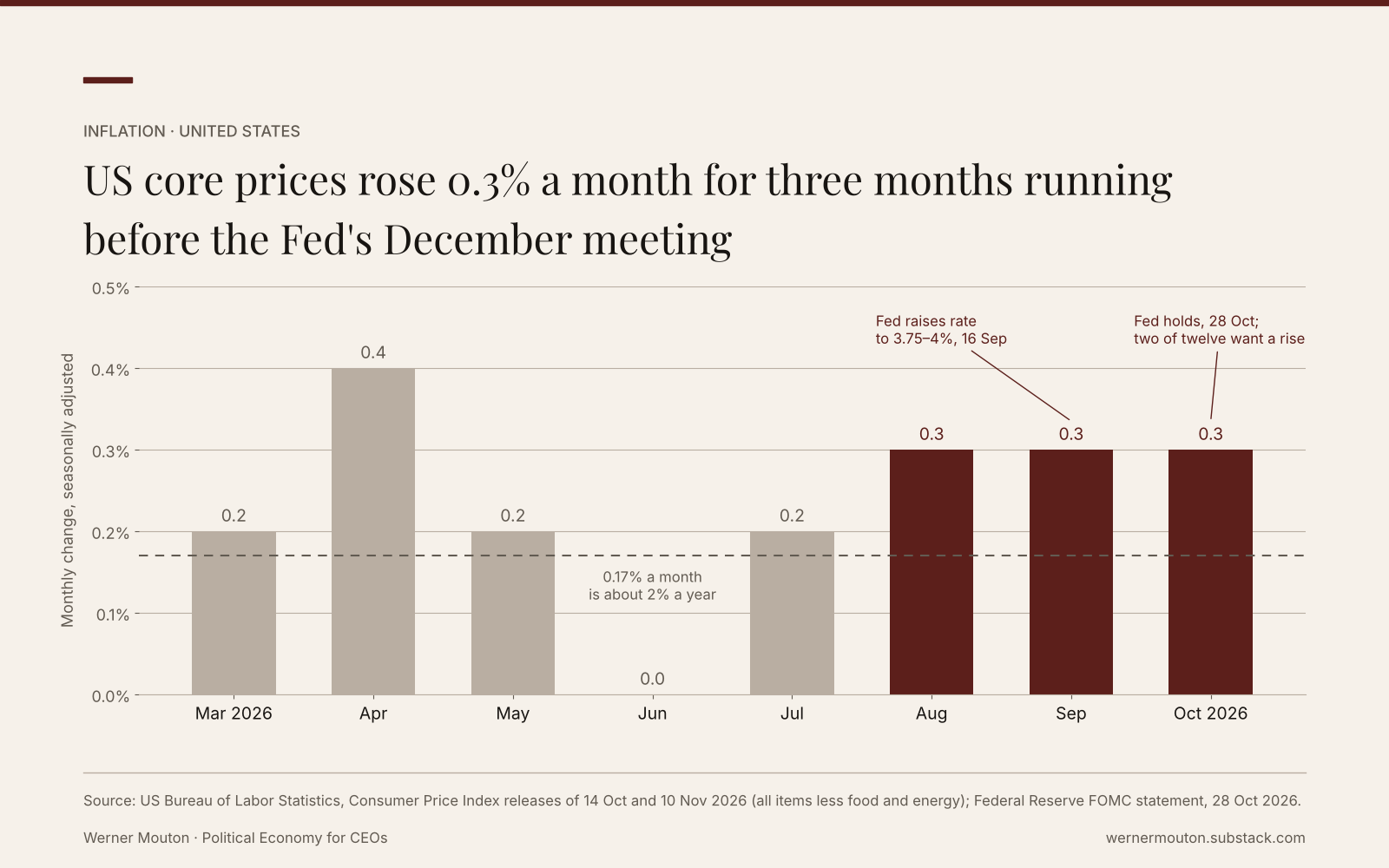
Economists at the Federal Reserve Bank of Minneapolis have measured where this inflation comes from. In August they estimated that tariffs add 0.2 to 0.4 points to core inflation on the Fed’s preferred measure. The AI build-out adds about 0.4 points more, because demand from data centres pushed the price of computers and similar equipment up 12.2 per cent in the year to July. The two causes are about the same size.
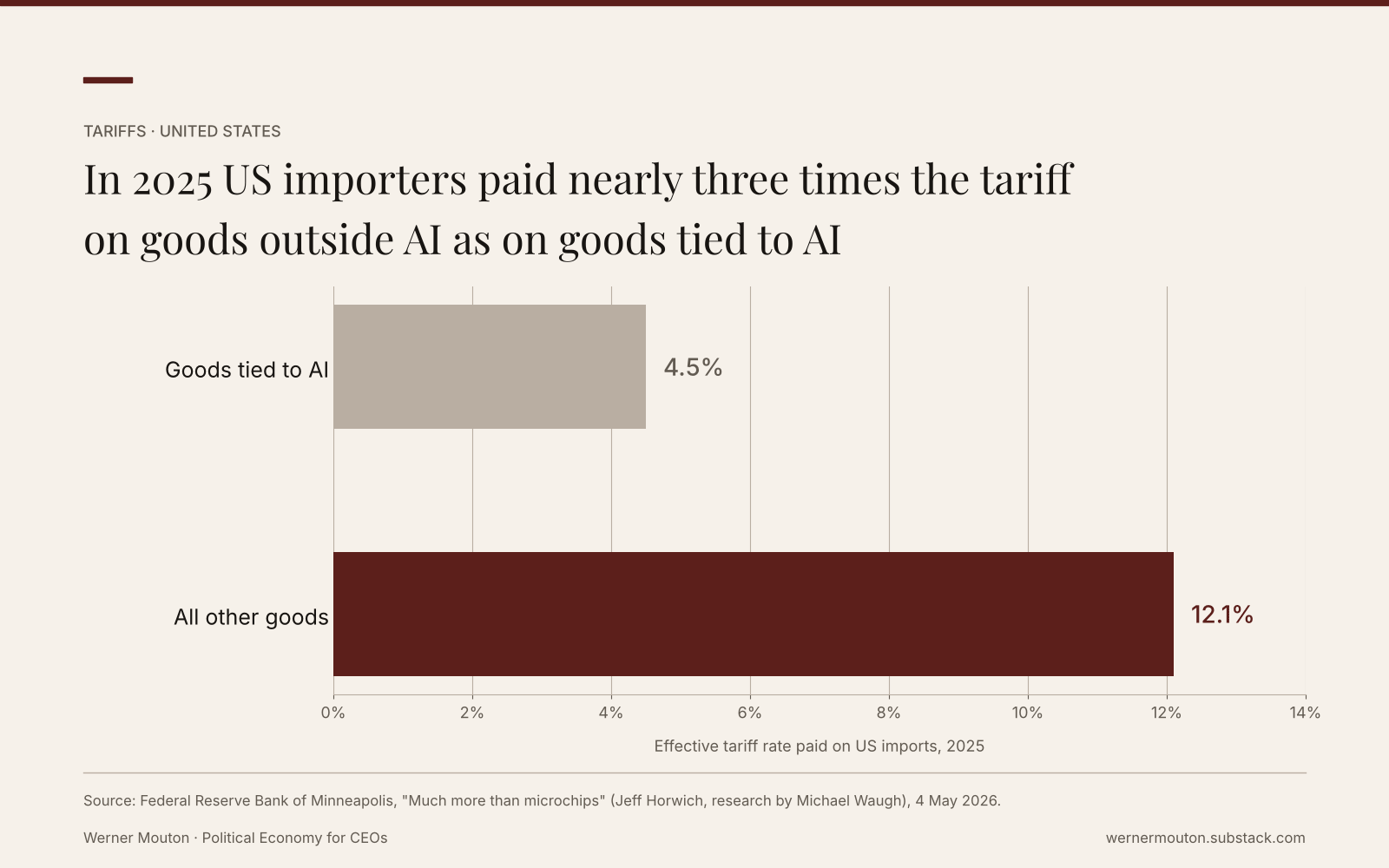
Washington treats them very differently. In 2025 American importers paid an effective tariff of 4.5 per cent on goods tied to AI and 12.1 per cent on everything else, because exemptions covered about 69 per cent of AI-related imports. On average, an importer of clothes, cars or machine parts paid nearly three times the rate that an importer of AI hardware paid.
A rise in December puts a second bill on the same businesses. The Fed cannot aim its rate at one sector, and a higher rate reaches every borrower. The businesses that meet it hardest borrow from banks and sell to households that borrow too: homebuilders, car dealers, retailers and mid-sized manufacturers. They have paid the higher tariff for a year. Now they will carry most of the cost of fighting an inflation that the lightly taxed AI build-out helped cause, while the build-out goes on.
This is an inference from the Minneapolis figures and the December calendar, not a finding of the Fed. The Fed does not set tariffs, and it raises rates for the whole economy because it has no other tool. The split it produces is a choice made elsewhere, in the tariff schedule.
That schedule now faces a new Congress and voters who have turned against the build-out. On 3 November Americans elected a Democratic Congress, and voters in Texas, Georgia and Ohio backed candidates who promised to rein in data centres. In Ohio, 15 towns and cities passed bans or limits. The new Congress takes its seats in January. The president, for his part, is weighing broader tariffs on semiconductors and the products that contain them, which would close the gap from the other side and raise the cost of the build-out itself.
Either way the gap will not hold. Few voters would accept a schedule that taxes the old economy’s imports at nearly three times the rate of the new one’s, followed by a rate rise that lands on the old economy first, if they saw it set out with the numbers. The December vote decides how much more the businesses outside the boom pay before Congress or the president decides who pays the tariff.