The Party After the Party
The Party After the Party
The Party After the Party
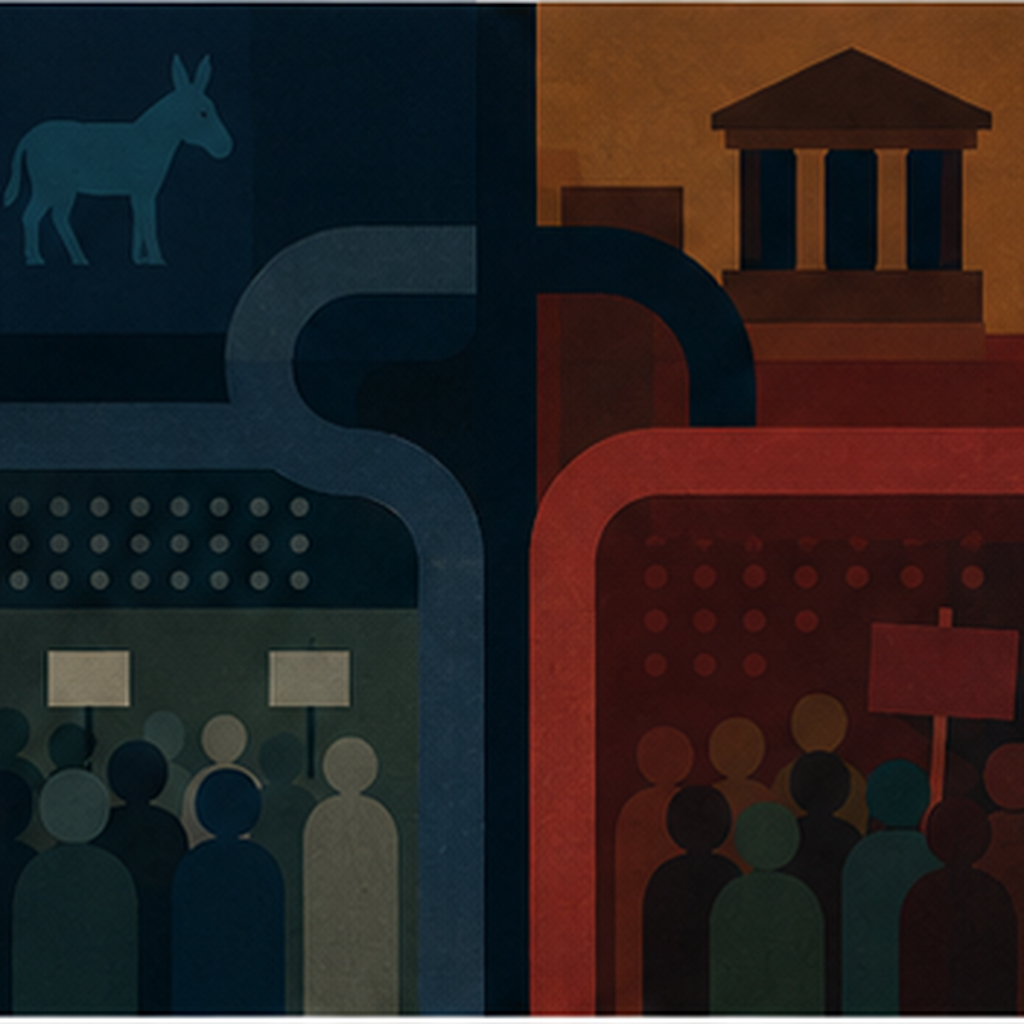
The Democratic Party is not dying. That would be too simple. It is splitting. One part still walks through the old doors. It knows the donors. It knows the consultants. It knows the language of restraint, order, NATO, markets, growth, moderation, and responsible government. It can raise money. It can win suburbs. It can fill a ballroom with people who say the right thing and fear the wrong thing. It can still govern. But it no longer knows how to speak to hunger.
That is the break.
The old Democratic elite believes politics is a matter of management. Keep the system calm. Protect the institutions. Say less than you feel. Do not frighten capital. Do not offend the lobby. Do not let the young people get too loud. Call every surrender realism. Call every compromise maturity. Then ask people to vote because the other side is worse.
Often, the other side is worse. But this is not enough. Fear can win an election. It cannot build a future.
Mamdani, AOC, and Sanders come from another place. They do not speak in the polished voice of liberal power. They speak from rent, debt, wages, trains, classrooms, hospitals, picket lines, and Gaza. Their politics begins where official language usually ends: with the cost of living and the cost of obedience. They ask who pays. They ask who profits. They ask why the poor must be patient and the rich must be reassured.
This is why Mamdani matters. He is not just another Democrat with better slogans. He sounds like a breach. He uses the Democratic ballot, but he does not belong to the party’s old moral world. He does not treat the donor class as a weather system. He names it. He does not treat housing as a market that sometimes fails. He treats it as a human need captured by landlords. He does not speak of Gaza as a tragic complication. He speaks as if dead people are dead people, even when their killers are allies.
That is why he feels dangerous to the establishment. Not because he is crude. Because he is clear.
The Democratic Party’s old bargain is breaking. For years it offered social tolerance without economic transformation. It welcomed diversity into unequal rooms. It defended rights while rents rose. It celebrated representation while wealth climbed upward. It asked working people to trust experts who had already lost their trust. It promised dignity but delivered paperwork.
Now the young are less patient. Rent taught them. Debt taught them. Climate taught them. Police violence taught them. Gaza taught them. They watched liberal leaders speak in careful sentences while children died on screens. They saw which grief counted and which grief had to be explained. They learned that power has a grammar. It uses passive voice. Mistakes were made. Civilians were killed. Hard choices were faced. Aid was delayed. No one acted. Things happened.
The new left rejects that grammar. It wants subjects and verbs. Landlords raise rent. Bombs kill families. Billionaires buy politics. Bosses break unions. Governments choose. Parties obey.
This does not mean socialism will sweep America tomorrow. The country is too large, too divided, too propagandized, too afraid. Many voters distrust the left. Many want order more than justice. Many are tired and reachable by cruelty. The future may turn dark before it turns decent.
But something has changed. The old center no longer commands belief. It can still command votes. It can still command money. It can still command television panels and newspaper columns. But it cannot command the imagination of the people who must live inside the ruins it managed.
The future may still pass through the Democratic Party. America gives few other roads. But it will not sound like the old party. It will sound poorer. It will sound younger. It will sound less grateful. It will speak of rent before growth, wages before markets, Palestine before alliances, public goods before private comfort.
It will not ask permission to be moral. It will not confuse access with power. It will not call silence wisdom.
The party after the party is already here. It is knocking from inside the house.