What Trump Is Trying to Prove in Cuba
What Trump Is Trying to Prove in Cuba
What Trump Is Trying to Prove in Cuba
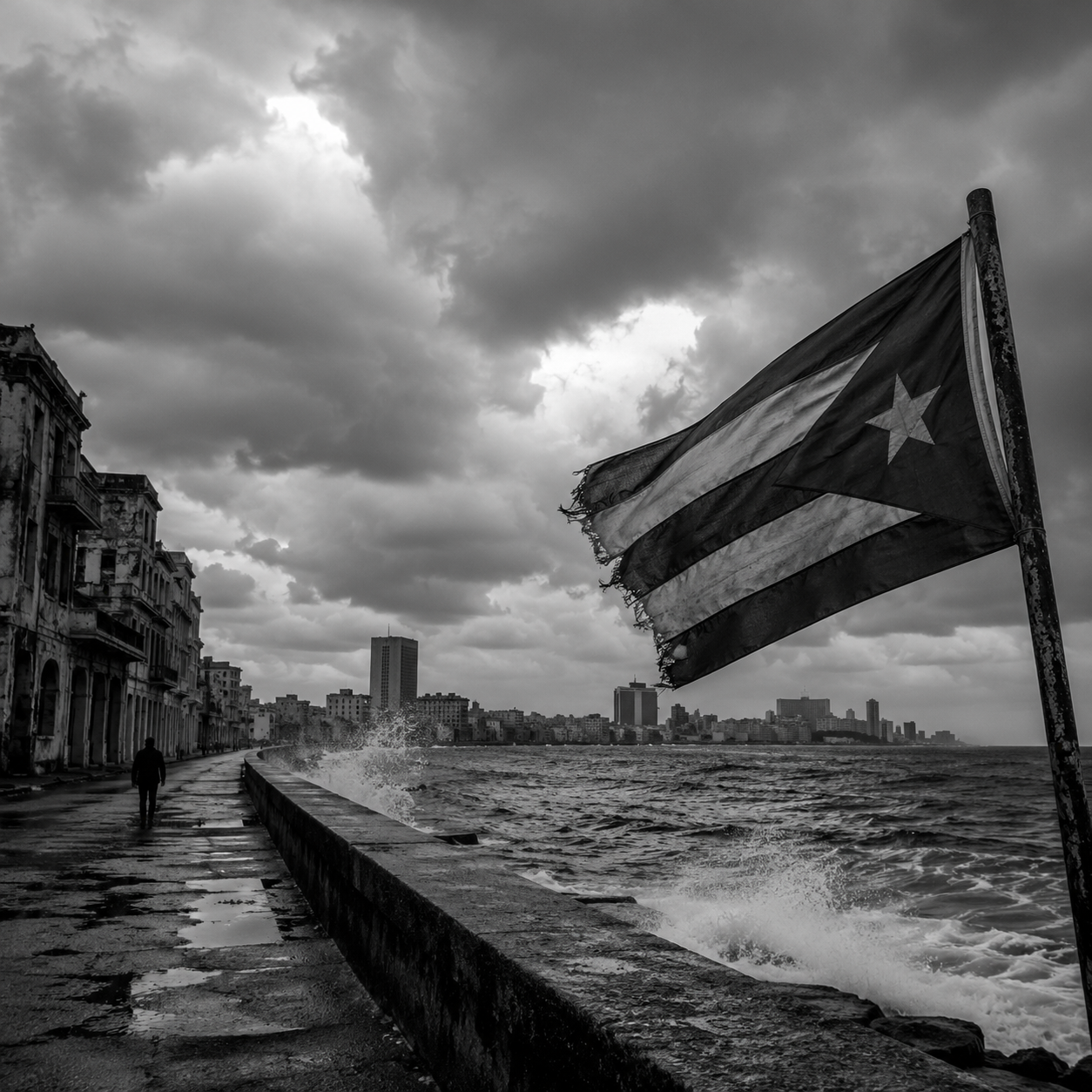
Cuba was already weak before Trump moved against it. The power grid was failing. Fuel was short. The peso had lost force. Tourism had not recovered its old weight. Doctors and young workers had left. The state still spoke in the language of sovereignty, but its buses, hospitals, ports, hotels, and homes showed a thinner fact: the island needed fuel, dollars, credit, and time.
Trump has chosen that moment to press. The pressure has not come as one act. It has come as a chain. Oil suppliers have been warned. Sanctions have widened. Cuban state firms and military-linked companies have been named. Foreign banks and hotel groups have been made to measure the cost of staying. The old case against Raúl Castro has been brought back into a courtroom. American military officials have appeared near Guantánamo. Each step can be described as a separate policy. Together they form a test.
The test is not mainly whether Cuba is dangerous. Cuba is poor, tired, and close. Its government represses dissent and controls much of the economy. Its security ties with Russia and China matter to Washington. But none of that explains the full register of the current campaign. A state that cannot keep the lights on is not being treated only as a security problem. It is being used as a stage on which the United States can show what pressure still buys.
Trump is trying to prove that coercion still works in the Caribbean.
That means several things at once. He is trying to prove to Havana that time has run out. The old embargo was long and often dull. It punished, but it also became part of the landscape. The Cuban state learned to survive inside it, and American presidents learned to denounce Cuba without having to decide much. Trump wants a shorter clock. Fuel is the instrument because fuel enters everything. Without it, there is no regular electricity, no reliable transport, no steady water pumping, no clean hospital routine, no tourism recovery, no ordinary day. Sanctions against an official may be symbolic. A fuel squeeze reaches the kitchen.
This is why the current policy is more than rhetoric. It is pressure at the hinge between state capacity and daily life. The Cuban leadership may be the named target, but the first proof appears in homes, streets, clinics, and queues. A pensioner cannot buy more food because a sanction names a general. A bus does not run because a speech in Washington condemns communism. But when suppliers pull back, banks hesitate, payment systems break, and fuel becomes scarce, the distance between foreign policy and the ration book closes. That is the mechanism Trump is using.
He is also trying to prove something inside the United States. Cuba has always carried domestic weight in American politics, especially in Florida. For hardline Cuban-American voters, there is value in the gesture itself: the refusal of détente, the naming of enemies, the promise that the revolutionary state will not be allowed to die slowly on its own terms. Marco Rubio gives that position institutional form. In this version, pressure on Cuba is not only foreign policy. It is proof of fidelity. It tells one constituency that the administration remembers the old wound and will act through the state, not only through speeches.
There is a regional message too. Cuba is not alone in the frame. Venezuela sits behind the story. Mexico, Honduras, Jamaica, hotel chains, shipping firms, banks, and payment companies all enter it. The point is not just to squeeze Havana. It is to make third parties ask whether Cuba is worth the risk. This is how American power often works now. It does not need to occupy every space. It can alter the cost of entering a contract, processing a payment, insuring a ship, hiring doctors, or keeping a hotel open. The pressure travels through balance sheets and compliance departments before it reaches the island.
That is the proof Trump wants: that Washington can still make other actors behave as if its will is the outer wall.
The risk is that this proof may be mistaken for success. A government can be weakened without being replaced by something better. A society can be exhausted without becoming free. Zúñiga’s warning is important here. Cuba’s state is not merely a presidential palace. It is a party, an army, a ministry system, a police apparatus, a provincial structure, and a set of firms tied to power. If the top cracks, the rest does not necessarily open into democracy. It may harden. It may splinter. It may push more people out. It may turn a political crisis into a social collapse.
Trump’s attack on Cuba is therefore an argument about American capacity before it is an argument about Cuban democracy. He wants to prove that the United States can still force movement in its near abroad; that enemies can be broken by pressure on fuel and finance; that allies, firms, and neighbours can be disciplined; that his administration can do what Obama’s opening refused and what the old embargo failed to finish.
The lights going out in Cuba do not prove that the Cuban people are closer to power. They prove that the state is under strain, and that ordinary people stand closest to the pressure. What happens after that is still open. The policy may produce talks. It may produce concessions. It may produce flight, fear, and a harder state.
But the thing Trump is trying to prove is already visible. He is trying to show that American power can still reach an island through every wire that connects it to the world.