America’s Weak Center
America’s Weak Center
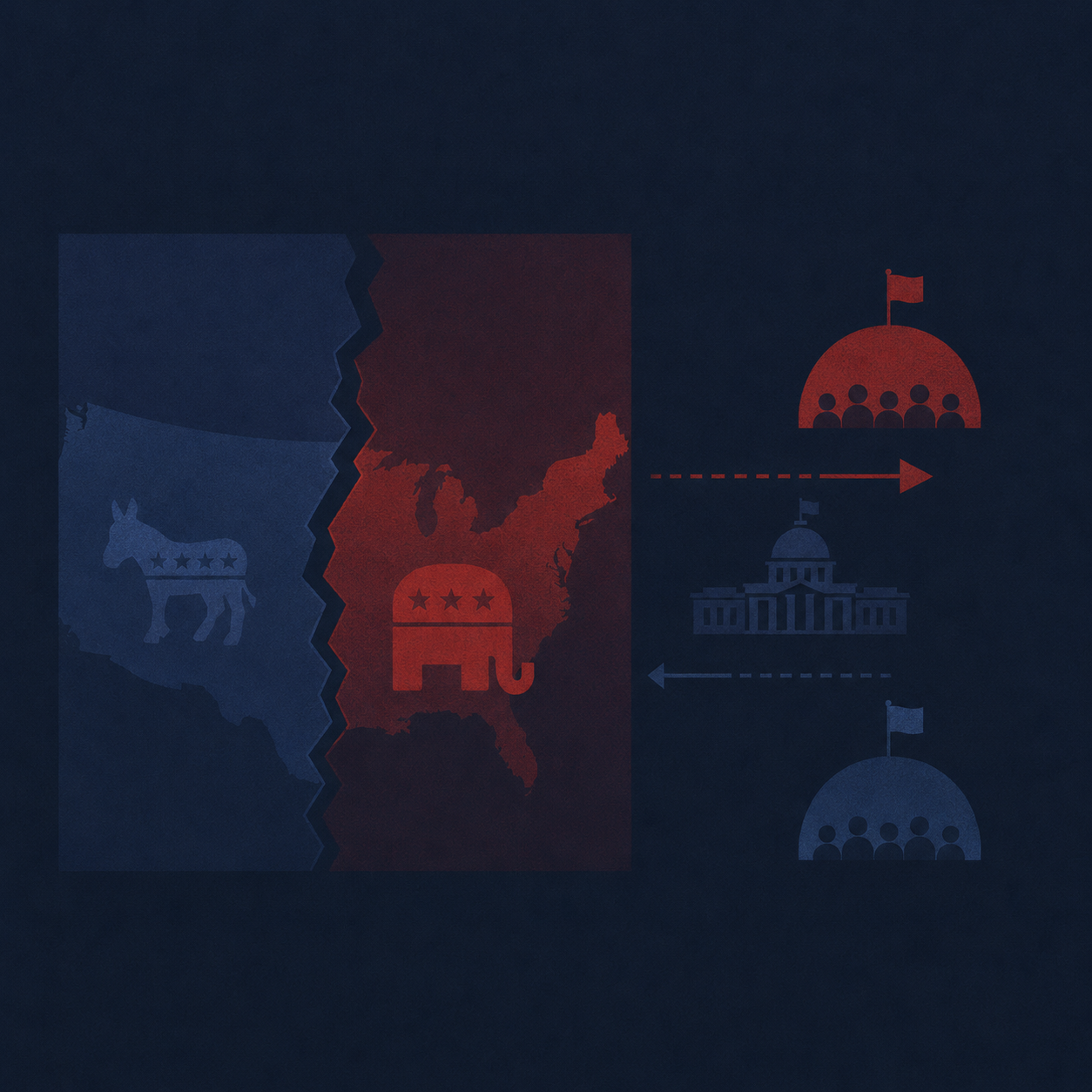
Two Energized Edges and a Weak Center
Look at Trump, Mamdani, and the fractured Democratic Party, and the direction is hard to miss. America is not moving toward settlement. It is moving toward a longer period of political instability, where each election becomes less a contest over policy and more a punishment of the last failure.
The right has hardened into nationalism. Its language is borders, tariffs, sovereignty, punishment, and restoration. It tells voters that the country was taken from them by globalists, migrants, bureaucrats, judges, corporations, universities, journalists, and enemies inside the state. It offers a politics of return. The old country can be recovered if the right enemies are defeated.
The left, or at least its most energetic wing, is moving in a different direction but through a similar emotional structure. Mamdani-style populism names landlords, billionaires, corporate donors, austerity politics, and the rigged city. It offers redistribution, rent controls, free public services, and a more confrontational state. It tells voters that ordinary people are not poor because of accident or bad luck, but because power has been organised against them.
These are not the same politics. But they are produced by the same failure.
Both speak to people who believe the old institutions no longer work. Both draw energy from the cost of living. Both turn distrust into a political identity. Both say the center has failed because it managed decline while pretending to govern.
That leaves the Democrats in a dangerous position. The party is split between progressives who believe moderation has become surrender and moderates who believe the left is walking into electoral disaster.
One side sees a broken system that needs confrontation. The other sees a polarized country where too much confrontation drives swing voters to the right. The party cannot fully choose either path, so it speaks in compromise while its voters increasingly want clarity.
The center is weak because it no longer has a convincing story. It can warn against extremism, but warning is not enough. It can defend institutions, but many people experience those institutions as slow, expensive, remote, and captured. It can call for norms, but norms do not pay rent, lower grocery bills, or make people feel secure.
This is the structural problem. Voters keep punishing failure, but the system keeps rewarding the loudest voices. Moderation sounds responsible, but it often feels like refusal. Populism sounds reckless, but it often feels like recognition.
The result is policy whiplash, cultural warfare, and deeper institutional decay. One side wins and tries to reverse the other. The other returns angrier. Each cycle confirms the other side’s worst fears. The institutions remain in place, but their authority weakens. The laws still operate, the courts still rule, the budgets still pass, and the elections still happen. But fewer people believe the system can produce a durable settlement.
This is how instability becomes normal. Not through one collapse, but through repeated failure.
Each party governs as if the other side is illegitimate. Each movement treats compromise as betrayal. Each administration enters office with a mandate to undo rather than build. The machinery keeps turning, but trust drains out of it.
This cannot hold forever. But for now, it is the shape of American politics: two energized edges, a hollowed-out center, and a public that no longer believes the old machinery can deliver.