Hormuz Has Changed
Hormuz Has Changed
Hormuz Has Changed
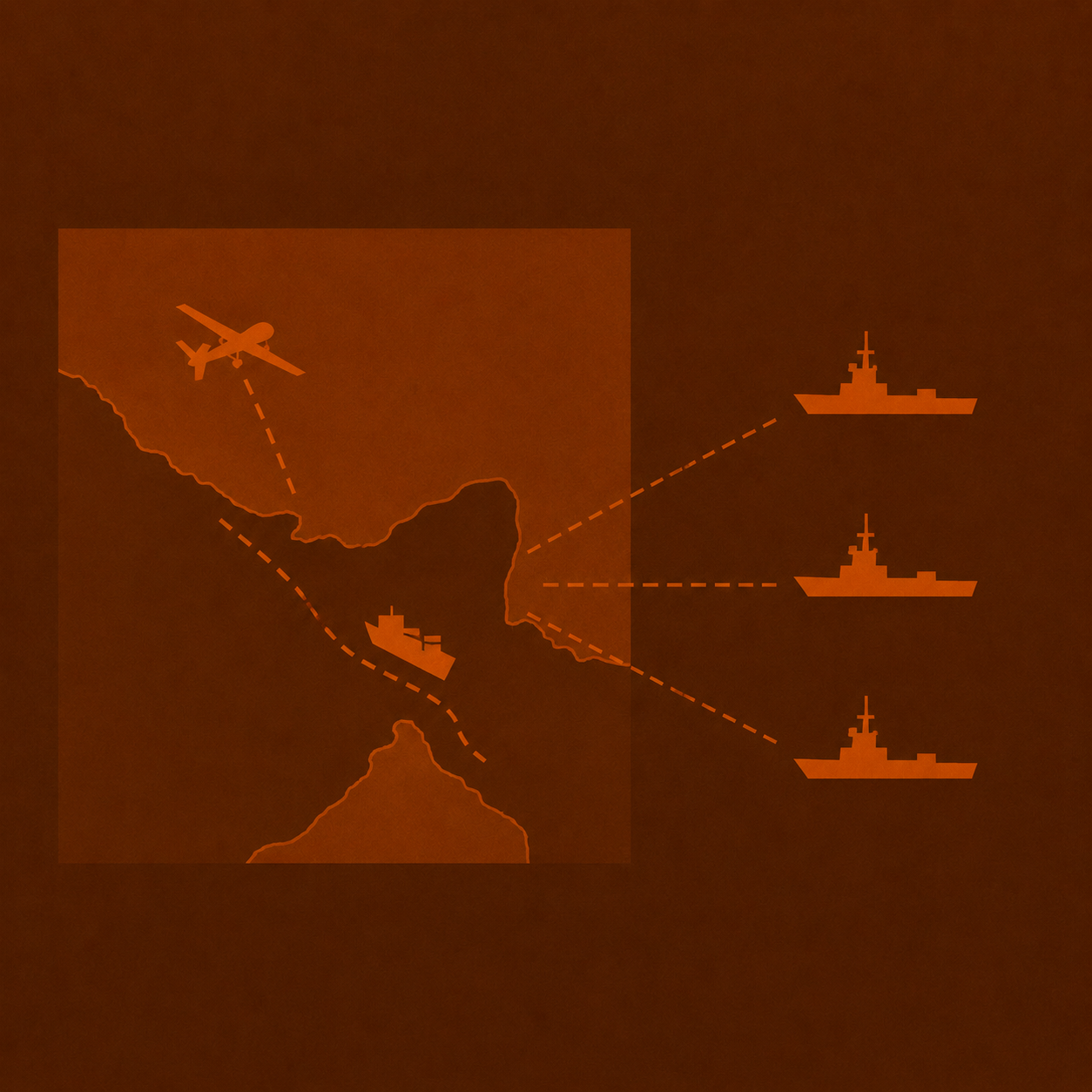
The Strait of Hormuz cease-fire is now being tested in the thing it was supposed to restore: ordinary passage. Iran struck the Ever Lovely, a Singapore-flagged cargo ship, as it moved near the Omani side of the strait. The United States answered with strikes on Iranian missile, drone, and radar sites. The U.N. maritime effort to move stranded vessels has paused. Traffic has slowed. The waterway is not closed, but it is no longer being treated as normal.
Iran did not need to close Hormuz to change it. It only needed to show that passage now depends on more than a declaration from Washington.
The drone attack did that work. A commercial ship became the surface on which a larger argument was written: who gets to say that the strait is open, who gets to set the route, who carries the risk, and who must ask permission without calling it permission.
The American answer was force. Trump called Iran’s move foolish. U.S. aircraft hit storage sites and radar installations. The language was familiar: retaliation, deterrence, freedom of navigation, safe passage. It is the vocabulary of a power that still believes order can be restored by showing that it can strike.
But shipping confidence does not return simply because a president sounds strong. A vessel does not move through Hormuz on rhetoric. It moves through a narrow channel of law, naval presence, insurance cover, crew willingness, port schedules, mine clearance, diplomatic wording, and the judgement of people paid to decide whether a voyage is worth the danger.
That is where Iran has asserted itself. Not by defeating the United States, and not by holding the strait in any absolute sense. Its power lies in making passage conditional. It can warn ships. It can contest routes. It can insist that Iranian waters and Iranian authority cannot be bypassed by a U.S.-backed arrangement along the Omani side. It can make shipowners and insurers ask whether a commercial crossing has become a political act.
That is enough to alter the price of the waterway.
More than a hundred vessels had passed before the U.N. effort paused, but hundreds more still needed evacuation. Behind the statements are crews waiting, ships idling, cargo delayed, insurers recalculating, and states trying to convert a fragile cease-fire into a usable route.
Trump can punish an attack. He cannot command confidence back into a strait.
American military reach remains enormous. But Hormuz is not secured by reach alone. It is secured by the expectation that ordinary passage will remain ordinary. Once that expectation breaks, every crossing carries a question. Every ship becomes evidence. Every insurer becomes a reader of geopolitics.
The strait is still there. The ships may still pass. The oil and gas may still move.
But Hormuz is no longer simply open. It is open under contest.