When AI Learns It Has a Flag
When AI Learns It Has a Flag
When AI Learns It Has a Flag
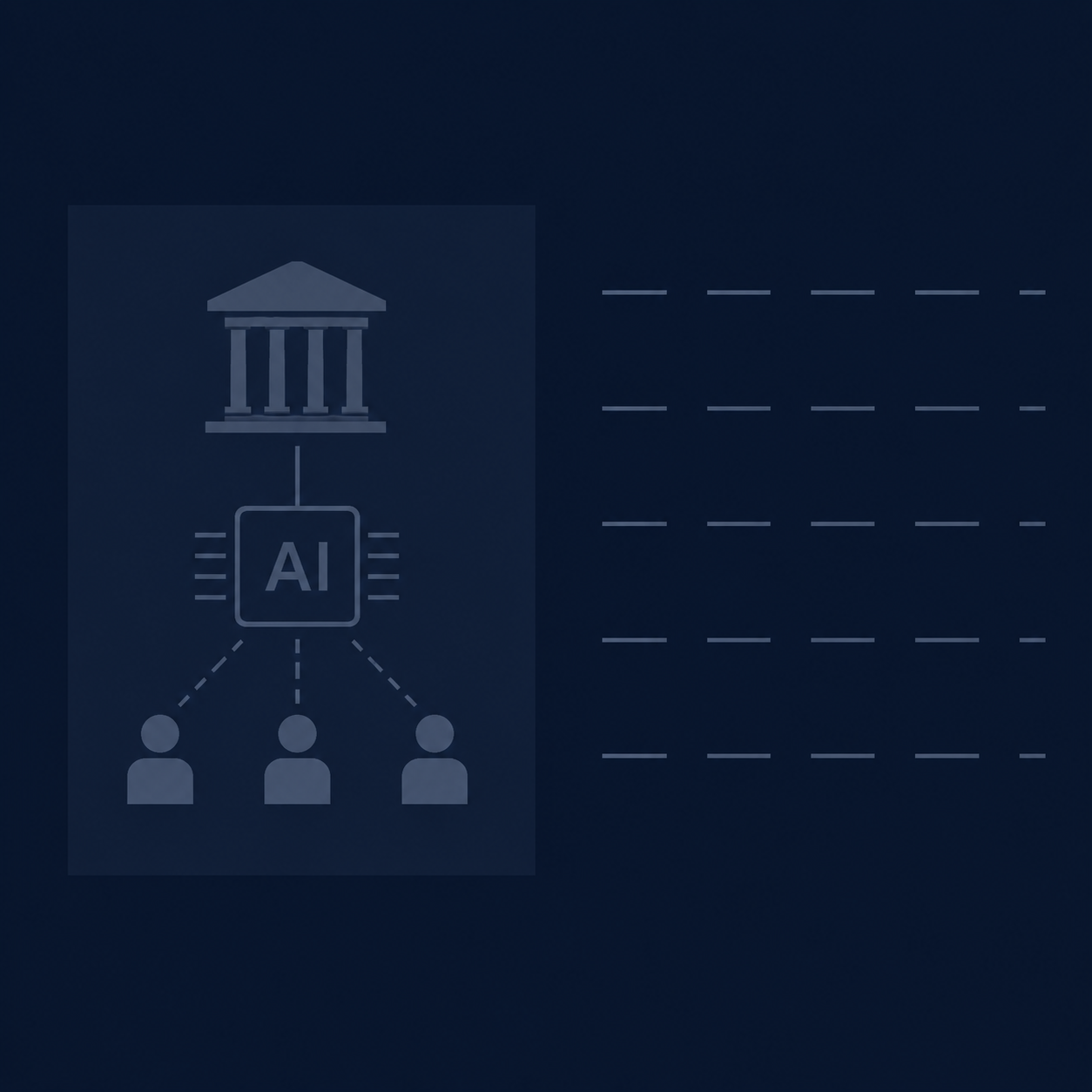
Bloomberg reports that the Trump administration asked OpenAI to stagger the release of an upcoming frontier model, with early access limited to a short list of trusted partners before a wider rollout.
The report follows an even sharper intervention involving Anthropic, which shut off global access to its most advanced models after the US government ordered restrictions on foreign nationals, citing national security concerns.
These details matter because they move AI out of the clean language of private technology markets and into the older language of state power, jurisdiction, and strategic control.
The small detail that matters in the Bloomberg report is not simply that the Trump administration asked OpenAI to stagger the release of a powerful new model. It is the category of power being asserted.
OpenAI is not being treated only as a private company bringing a product to market. It is being treated as a strategic asset whose release schedule, access rules, and partner list may fall under the shadow of the American state. The company may still have investors, customers, engineers, and a public story about innovation. But the state is now visibly inside the room.
This is often the charge made against China: that firms cannot be understood apart from the state, and that foreign users must assume some political risk when they build on Chinese technology. The point is not that the United States and China are the same. The point is that the clean Western distinction between private platform and state power becomes harder to sustain when a government can ask, pressure, or order a frontier AI company to delay, restrict, or sequence access.
Bloomberg reports that OpenAI was asked to release GPT-5.6 first to a short list of trusted partners before wider distribution, and that Anthropic had earlier shut off global access to its most advanced models after the government ordered restrictions on foreign nationals, inside and outside the United States.
It also reports that a new framework may give the US government access to frontier models for up to 30 days before release. That is a quiet but profound shift. The model is no longer only a commercial product. It becomes a governed object.
For non-Americans, this changes the risk calculation. A company in Europe, Africa, Asia, or Latin America may use an American model as part of its research, software, customer service, coding, defence analysis, legal workflow, or industrial process. It may believe it has chosen a vendor.
But it may also have chosen an infrastructure whose availability can be shaped by Washington. Access can be slowed. Partners can be privileged. Foreign nationals can be excluded. A research collaboration can become politically exposed without the foreign user having changed anything.
This is not only protectionism. It is infrastructure sovereignty.
The United States is discovering that AI models are not merely apps. They are productive capacity, security concern, industrial tool, and geopolitical lever. Once that is understood, state intervention follows. The market sells the technology as universal. The state remembers that it has a flag.
The deeper lesson is uncomfortable. The global digital economy was sold as borderless, but its most important systems are housed inside jurisdictions. Cloud platforms, chips, models, payments, app stores, sanctions lists, export controls, and now model-release schedules all reveal the same structure.
The user experiences a tool. The state sees a chokepoint.