The Fed Called
The Fed Called
The Fed Called
The New York Fed called banks on Friday. They asked about the yen's exchange rate.
Wall Street read the calls as groundwork for intervention. Japan might buy yen. The US might help. That combination has not happened since 2011.
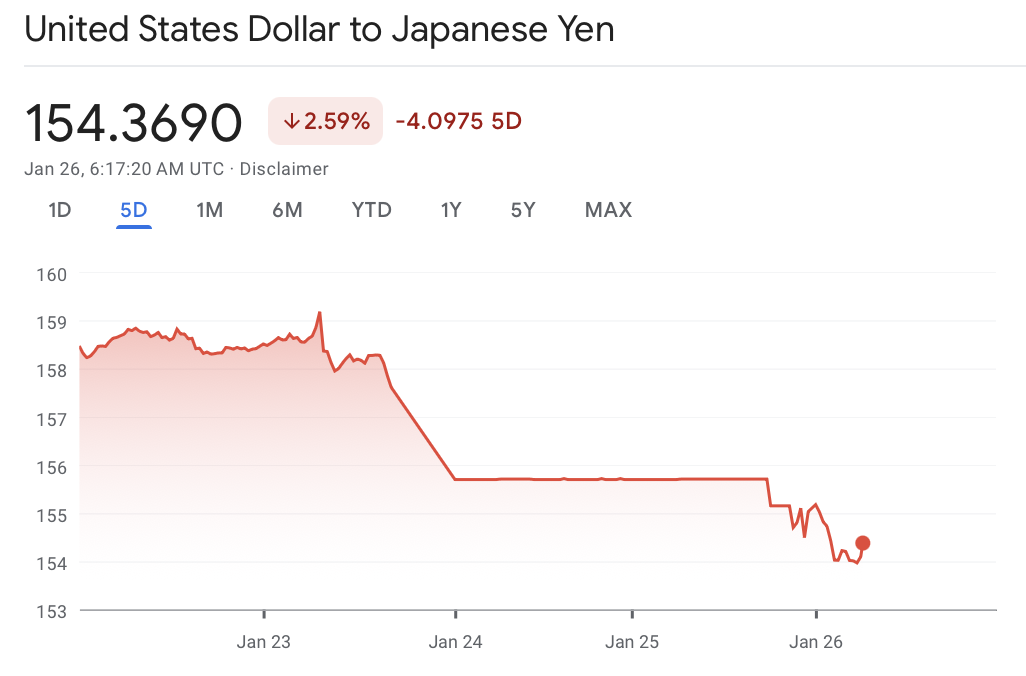
The yen surged 1.75 percent in a single session, its biggest daily move since August. It hit 155.63 per dollar, the strongest level this year. The rally reversed a slide toward 160, the threshold that triggered Japanese intervention in 2024.
The yen surged 1.75 percent
Rate checks work as warnings. Authorities use them when verbal statements fail to move markets. They signal that officials view trading as excessive and stand ready to buy or sell currency themselves. Japan's finance minister, Satsuki Katayama, had already issued warnings to speculators. The market kept pushing. Then the Fed called.
The trigger sits in the bond market. Japan's 40-year government bond yield hit a record high this week. The selloff spooked Washington. US Treasury Secretary Scott Bessent called Tokyo about it. He told Katayama the Japanese bond rout had affected Treasuries. The Trump administration wants long-term US borrowing costs contained. A disorderly unwind in Tokyo works against that goal.
The US has intervened in currency markets three times since 1996. The last came after the 2011 earthquake, when G7 nations sold yen together to stabilise trading. Joint action carries more weight than unilateral moves. It signals coordination. It tells speculators that two central banks stand on the other side of the trade.
Rate checks do not guarantee intervention. Past interventions have not produced lasting effects without policy changes behind them. But the fact that US involvement is now plausible changes the calculus.
Yen shorts face a new question. How much are they willing to bet against both Tokyo and Washington?