The Alliance Dilemma: European and Asian Responses to American Nationalism
The Alliance Dilemma: European and Asian Responses to American Nationalism
The Alliance Dilemma: European and Asian Responses to American Nationalism
In February 2025, Vice President JD Vance travelled to Munich for the annual security conference. He did not deliver the usual soothing words. He criticized Europeans for shirking on defence and for stifling freedom of expression in their countries. Defence Secretary Pete Hegseth told officials in Brussels that “the United States will no longer tolerate an imbalanced relationship which encourages dependency.” Secretary of State Marco Rubio said Washington had “incredible opportunities” to partner with Russia. Then came the tariffs. Then came reports of senior officials insulting European allies on a leaked Signal chat.
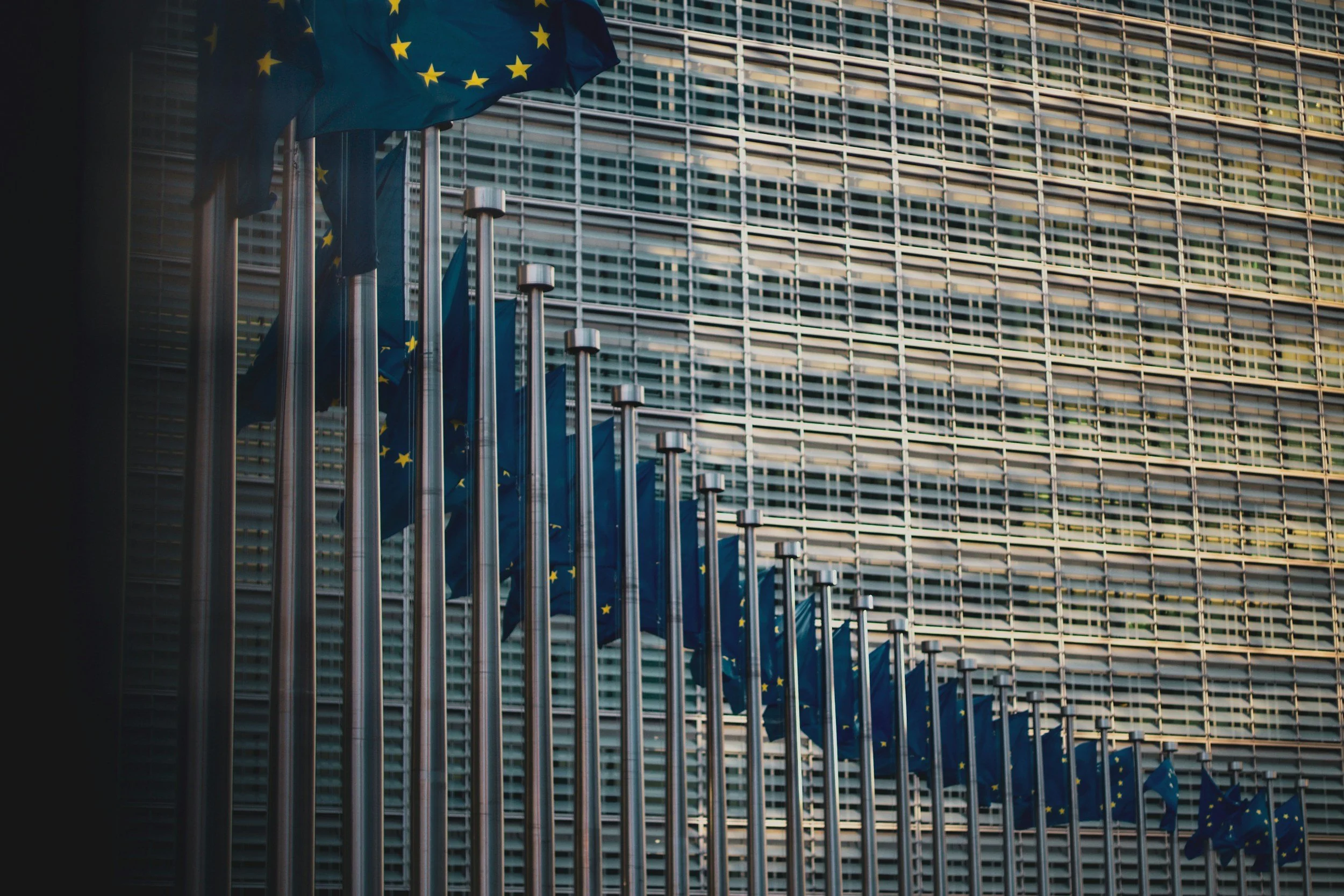
The old bargain—American security in exchange for European alignment—had rested on a belief that the relationship was permanent. That belief ended. Kaja Kallas, the EU’s top foreign policy official, said it looked as if the United States were “trying to pick a fight” with Europe. In a poll of 18,000 Europeans conducted after Trump’s victory, more than half considered the United States merely a “necessary partner” rather than an ally. Only 22 percent were willing to use the word ally. Eighteen months earlier, more than half had done so.
German Chancellor Friedrich Merz was blunt. “Americans—at least this part of the Americans, this administration—are largely indifferent to the fate of Europe,” he said after his centre-right party won elections in February. “My absolute priority will be to strengthen Europe as quickly as possible so that, step by step, we can really achieve independence from the United States.” Germany then did something it had resisted for decades: it changed its constitution so it could borrow money for military purposes. The government signalled plans to expand defence procurement through at least 2030.
The numbers shifted. In 2014, European NATO members spent an average of 1.5 percent of GDP on defence. By 2024, that figure had risen to 2.2 percent. Estonia and Poland spent more than Washington did as a share of their economies—3.43 percent and 4.12 percent, respectively. In 2024 alone, NATO’s non-U.S. members increased equipment expenditure by 37 percent, compared with 15 percent for the United States. Belgium, Italy, and Spain announced they would reach the alliance’s two percent target in 2025.
The EU changed its deficit rules so members could budget up to 1.5 percent more of GDP on defence. If countries took advantage of this provision, they could spend more than $700 billion more through 2030 than was currently planned. The EU also proposed a $163.5 billion pool for long-term, low-interest loans to procure military goods. Countries drawing from that pool would have to spend the funds on European defence companies. Germany, the Netherlands, Romania, Spain, and Sweden signed a $5.6 billion contract to procure Patriot missiles jointly.
The alliance distributed leadership differently. NATO had established nine battle groups across its frontline countries. Only in Poland did the United States lead. Sweden led in Finland. The United Kingdom led in Estonia. Germany led in Lithuania, Spain in Slovakia, France in Romania, Italy in Bulgaria.
Asian allies watched and calculated. Japan had sent more bilateral economic and humanitarian aid to Ukraine than Finland, France, or Poland. In 2021, Germany and the Netherlands had deployed frigates to the Indo-Pacific for the first time in decades. Taiwan’s representative in Washington had put the connection plainly in 2023: “Ukraine’s survival is Taiwan’s survival.” Former Japanese Prime Minister Shinzo Abe had said a Taiwan emergency would be a Japanese emergency.
But Asian allies also faced their own version of the dilemma. For decades, while China rose and began asserting its claims more forcefully, Japan’s defence spending had remained flat at one percent of GDP. Defence spending in the Philippines and Taiwan had fallen. Japan had since made changes—investing in counterstrike capabilities and pledging to increase military spending—but its planned spending in 2025 was still only 1.8 percent of GDP. Taiwan, facing an existential threat, spent less than 2.5 percent.
Leaders in Tokyo feared Washington would cut a deal with Beijing. Leaders in Seoul feared Trump would reach a nuclear agreement with North Korea that disadvantaged South Korea. In November 2024, the EU had signed new security and defence partnerships with Japan and South Korea—the first time Brussels had done so with Asian partners. Italy, Japan, and the United Kingdom were jointly designing a new fighter plane.
The hedging had begun. European officials spoke of their relationship with the United States using a term they had previously reserved for China: de-risking. European leaders signalled interest in joining Asia’s Comprehensive and Progressive Agreement for Trans-Pacific Partnership, which would leave Washington outside a trade bloc representing roughly 30 percent of global GDP. India, facing particularly high U.S. tariffs, paused its purchase of American weapons rather than meet Trump’s demand to give up its imports of Russian oil.
The fundamental tension remained unresolved. American allies needed Washington’s security guarantees. They also needed to prepare for a future without them. The money flowed toward both ends at once: toward American weapons that ensured interoperability with U.S. forces, and toward European and Asian industrial capacity that would function if those forces left. Since 2020, European NATO allies had more than doubled their weapons imports and increased the proportion they bought from the United States from 54 percent to 64 percent. At the same time, the EU’s new procurement pool excluded American companies unless they manufactured in Europe, employed European workers, and paid European taxes.
Washington had spent decades pressing allies to spend more. They were spending more. But the spending was not producing what Washington expected. It was producing the capacity for allies to act without Washington.