The Secretary General's Wrong Office
The Secretary General's Wrong Office
The Secretary General's Wrong Office
The NATO Secretary General works for thirty-two countries. Mark Rutte works as though he answers to one.
On 21 January 2026, Rutte met Donald Trump at the World Economic Forum in Davos. Hours later Trump posted that they had formed "the framework of a future deal with respect to Greenland and, in fact, the entire Arctic Region." The tariffs Trump had threatened against eight European allies were dropped. Rutte called the meeting "very productive." Gen. Alexus Grynkewich, NATO's Supreme Allied Commander Europe, said something different. "We had no discussion about that security framework," he told reporters. "We found out about it when everyone else did."
That sentence is the problem. The Secretary General negotiated a deal that touched on territory, sovereignty, mineral rights, and base access, and he did it without the military command, without the North Atlantic Council, and without the government whose land was on the table. European diplomats said Rutte "negotiated this on his own." The Danes, one diplomat added, "are still stressed." Greenland's premier, Jens-Frederik Nielsen, said he did not know what was in the deal. The Secretary General chairs the North Atlantic Council. He speaks on behalf of the Alliance. He encourages consensus. He does not have a mandate to negotiate the sovereign territory of a member state with another member state that has threatened force to take it.
The North Atlantic Treaty says members must "settle any international dispute by peaceful means in such a manner that international peace and security and justice are not endangered." Trump threatened 10 to 25 percent tariffs on Denmark, Norway, Sweden, France, Germany, the United Kingdom, the Netherlands, and Finland. He posted "NATO: Tell Denmark to get them out of here, NOW!" and described Danish forces in Greenland as "two dogsleds." He did not rule out military force until his Davos speech, and even then he said, "we have to have the ability to do exactly what we want to do." The Secretary General's job, under Article 1, was to name this for what it was. He did not. He reframed it. He took a sovereignty crisis between one member threatening another and turned it into a shared logistics problem called "Arctic Security."
The reframing has a shape. Rutte talks about Russian bases reopening in the Arctic and Chinese ships in northern waters. Denmark says there are no Chinese vessels near Greenland. Rutte talks about the need for the U.S. as "first responder." Copenhagen has spent $14 billion on Arctic defense: P-8 surveillance aircraft, F-35s, enhanced missile systems, and the Arctic Response Force. The gap between Rutte's public line and the record is wide and plain.
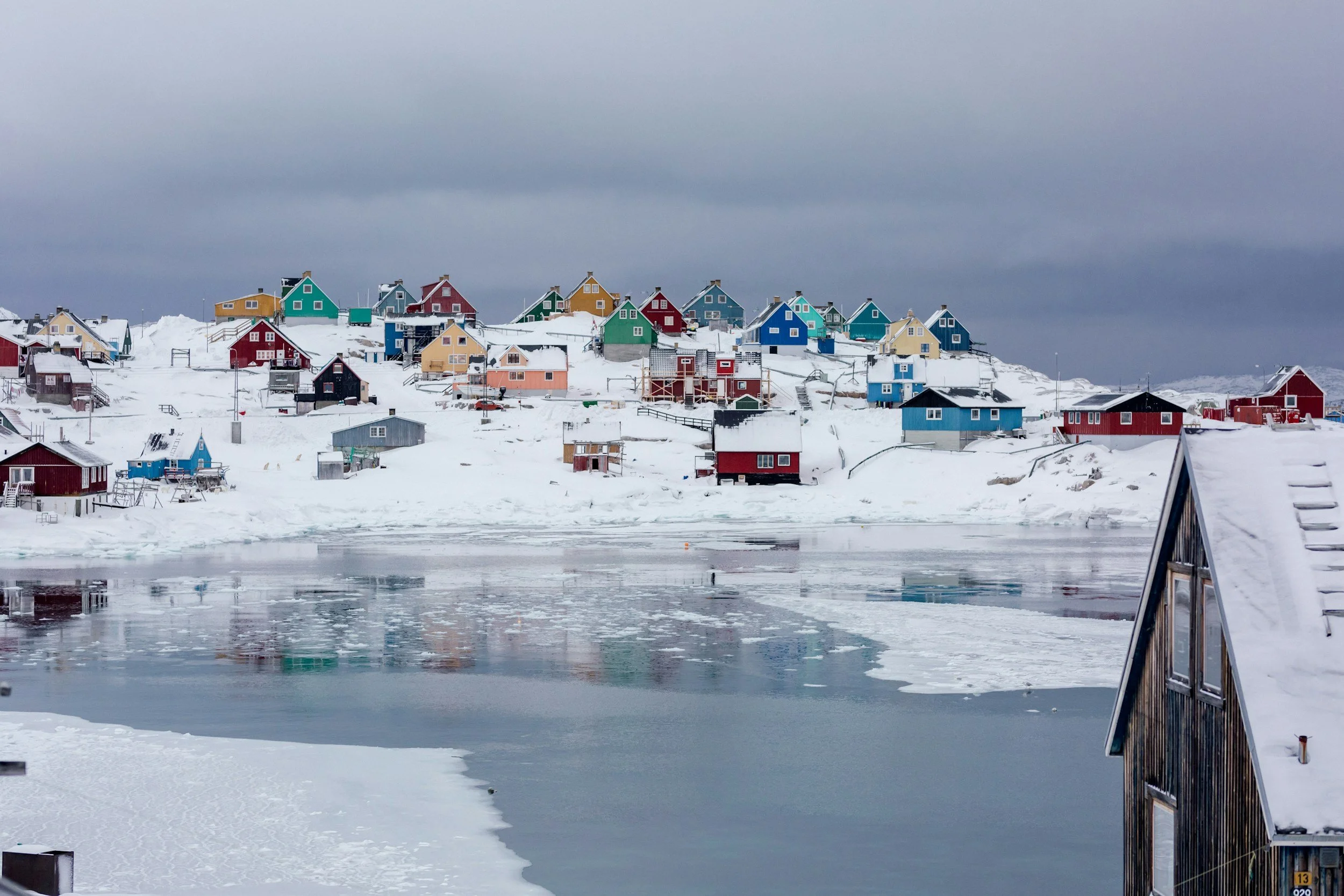
Arctic Sentry launched on 11 February 2026. It is not a military operation. It does not station troops in the region under a NATO banner. It bundles existing national exercises under one label and runs them through Joint Forces Command Norfolk. The thing it does best is give Rutte a name to put on the deal. It lets him say the Alliance is responding to the Arctic threat. It lets Trump say he got something. It lets both men move on. But it does not address the fact that a sitting U.S. president threatened to annex the territory of a fellow ally, or that the Secretary General's response was to help him save face.
An EU official in Davos said the framework was "the best way to divide us." The concern is structural. When the Secretary General acts as a go-between for a bilateral sovereignty dispute, he stops being the voice of the Alliance and starts being a broker for its most powerful member. The interlocutors Trump named to lead the negotiations were Vice President JD Vance and Secretary of State Marco Rubio. Their focus, according to the report, has been mineral rights and base access, not collective defense. Rutte told Reuters that minerals were not discussed. U.S. officials told ABC News the deal was about "total access" to parts of Greenland "forever" and "for infinity."
Rutte told Fox News that Trump was "totally right" about the Arctic. He praised Trump for pushing European spending to 5 percent of GDP. He told the European Parliament to "keep on dreaming" if they wanted strategic autonomy. He said NATO was not in crisis. "No, not at all."
The Secretary General does not work for the president of the United States. He works for the Alliance. The Alliance includes Denmark. The Alliance includes Greenland. And the first obligation of the office is not to flatter the strongest member but to hold the treaty together, starting with the article that says disputes are settled without threats and without force. Rutte has not done that. He has done the opposite. He has taken the threat and dressed it up as cooperation.