What Washington Sees
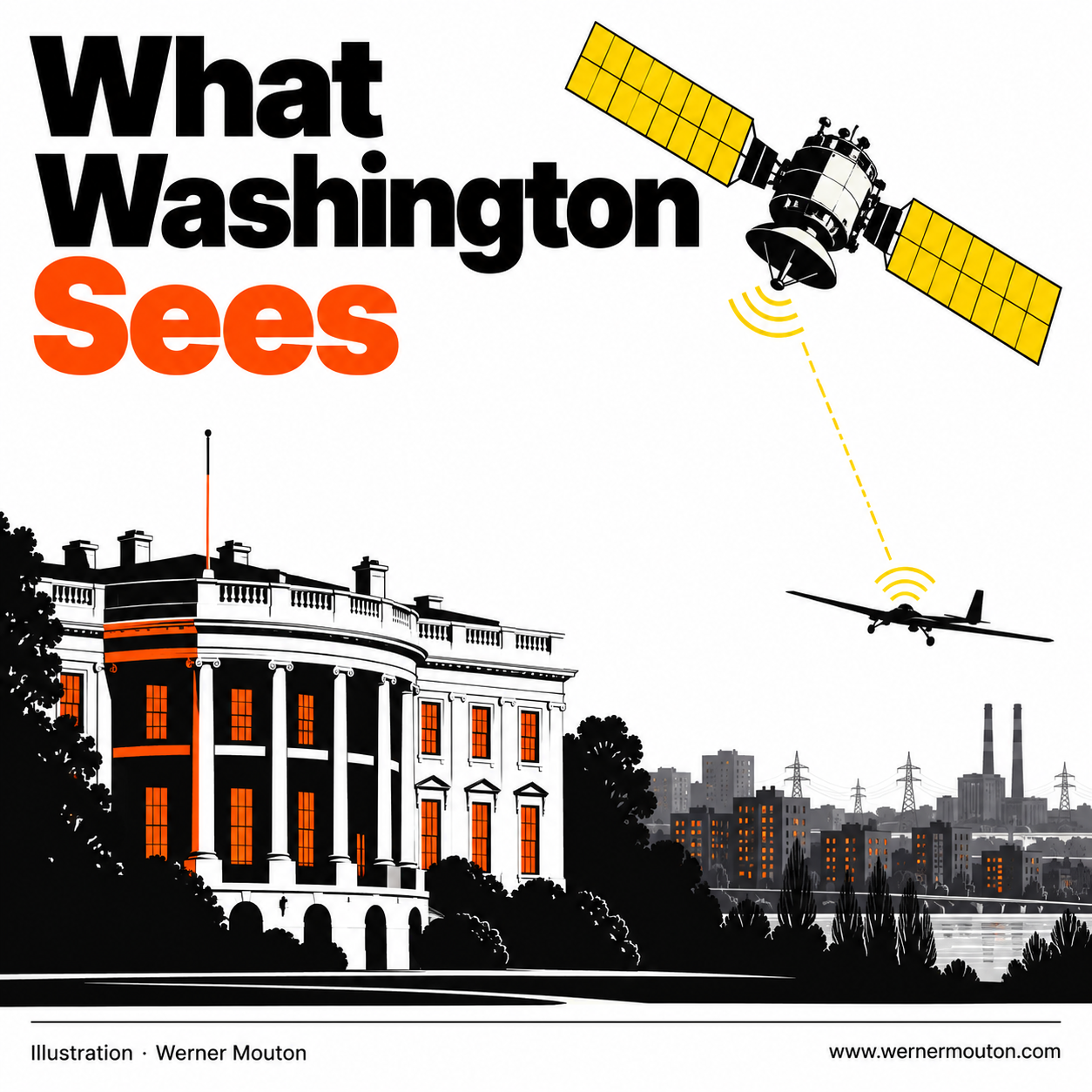
What Washington Sees
What Washington Sees
The United States can see a Russian ballistic missile within moments of its launch. American sensors register the launch and American officials have for years passed the signal to Kyiv, and that signal gives Ukrainians a few minutes to reach a shelter and gives Ukrainian crews a few minutes to aim. An Iskander needs only a few minutes to reach a Ukrainian city. For a missile that fast the warning is most of the defense.
On the night of Monday, October 12, five Russian ballistic missiles struck civilian targets in Kyiv and no warning reached the city first. Volodymyr Zelensky said so on Tuesday. He did not name the partner who had stayed silent. A senior Ukrainian official said Kyiv had been told the gap was a failure and perhaps a matter of weather. Donald Trump told reporters the United States was still sharing intelligence. On Tuesday night the missiles came again. Ukraine’s air force had no warning of the first wave and had warning of the three waves after it.
That night Russia fired 39 ballistic missiles and more than 120 drones at Kyiv and Kharkiv and the country around them. All three of Kyiv’s combined heat and power plants were hit. At least 600,000 people lost electricity. Five people died in Kyiv and 36 were wounded.
On Wednesday SpaceX capped the speed of the Starlink terminals mounted on Ukrainian drones. A slower drone is easier for Russian air defenses to shoot down. By Wednesday evening the links allowed drones to fly at 161 kilometers an hour, and a Ukrainian official said that was still too slow to chase down the jet-powered drones Russia now sends. Elon Musk wrote that limits on the military version of Starlink are set by the US military and in the end by the President.
These are the facts of one week. They describe a war in which Ukraine’s defense depends on three things it does not hold. The first is warning. The second is the speed of the link between a drone and its operator. The third is the Patriot PAC-3 interceptor, the one weapon in Ukraine’s inventory that reliably stops a ballistic missile. The American war with Iran has drained the Patriot stock, and Ukraine’s European partners have not found the 300 interceptors Kyiv asked for to get through the winter.
Here is the change I think this week shows, and it is an inference from the facts above. Through the early years of the war the United States mostly sent goods. A howitzer shell crossed the border and became Ukrainian. Washington could stop the next shipment but it could not take back the shell. Warning and bandwidth work differently. They never cross the border. They stay on American satellites and American servers and they reach Ukraine one night at a time, and they can be reduced by degrees. A shipment that stops is public and has to be defended in public. A warning that fails to arrive can be called weather, and a link that slows can be called a glitch.
The price of the week is easier to state. On Friday, October 9, Trump announced a deal for the United States to import Russian diesel. He has blamed Ukraine’s strikes on Russian refineries for record diesel prices in America, and the midterm elections are weeks away. He told Ukraine to stop hitting refineries and said that as long as it did, it could do whatever it wanted to Russia. On Saturday he said Ukraine needed a new president. On Sunday he announced that Russia and Ukraine had agreed to stop striking each other’s energy systems. The Kremlin has not confirmed any such agreement. Ukraine stopped for three days. Russia kept hitting Ukraine’s power plants every night.
Zelensky has an account of what connects these events. In an interview in London he said American officials had told Ukrainian officers that intelligence would be blocked if the refinery strikes did not stop, and that the blackout was explained to Kyiv afterward as a technical problem. He said the Starlink slowdown came after he asked for more air defense. Washington has denied cutting intelligence. The sequence is established. The motive rests on Zelensky’s word against the White House’s, and readers should hold the two apart.
The same switches have been turned the other way. Earlier this year Musk helped Ukraine build a registration system that limited Starlink at the front to Ukrainian terminals, and for a short time Russian units lost their communications and fell into disorder. For months Kyiv has asked for Starlink coverage over the strip of Russian territory where most ballistic missiles launch, so its drones could hunt the launchers. Trump said the decision belonged to Musk and Musk said it belonged to Trump. This week Musk settled the question in public. The decision belongs to the President.
So the settings that decide how many Ukrainians die in a night can be set for Ukraine or against it. That is not the same as abandonment. It is a war in which a Ukrainian city’s defense is adjusted in Washington by an administration weighing the price of diesel in Ohio and Pennsylvania.
On Wednesday Zelensky answered. He told the Financial Times the pause on refinery strikes was over. “We’re done,” he said. Ukraine will hit Russian refineries again, and that is the one form of pressure Kyiv has chosen and built for itself.
But the refinery campaign is a long-range drone campaign. Ukraine’s drones fly their long missions on Starlink, and the speed of each link is now a setting in Washington. The United States can see a Russian missile within moments of its launch. It can also see every Ukrainian drone that rises toward a refinery in Russia.