NATO Says Nothing.
NATO Says Nothing.
NATO Says Nothing.
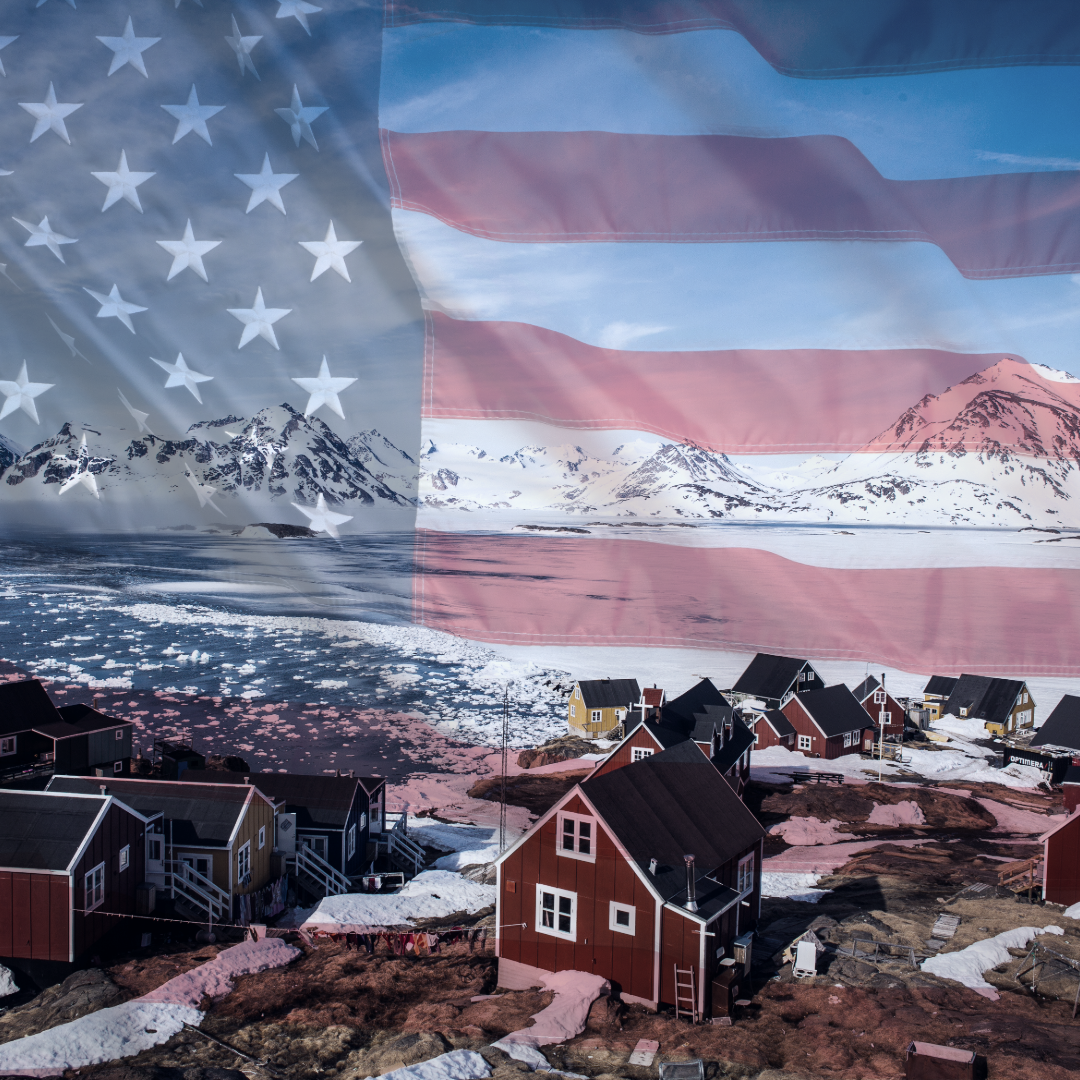
Danish Prime Minister Mette Frederiksen met NATO Secretary General Mark Rutte at NATO Headquarters in Brussels on Tuesday, January 28, 2025. Before the meeting started, Frederiksen said she had no reason to believe that there was a military threat to Greenland or Denmark. NATO put out a notice. No press. No questions. Rutte said nothing. NATO said nothing.
On the same day, before the NATO meeting, Frederiksen met German Chancellor Olaf Scholz in Berlin and French President Emmanuel Macron in Paris. Scholz said that borders must not be moved by force. In Paris, Frederiksen spoke to reporters after meeting Macron. She said she got ‘a great deal of support’ and a ‘very, very clear message’ about respect for sovereignty. Both meetings had press conferences. Both meetings had statements. Both statements confirmed Danish sovereignty.
Frederiksen requested the NATO silence. She opted for appeasement. She hoped Trump would get distracted and move on. He did not. And the silence did not change the fact that one NATO member’s territory was now threatened by another. Frederiksen needed words. She found them in Berlin and Paris. Not Brussels.
In December 1956, at a NATO meeting in Paris, foreign ministers adopted a resolution called the ‘Resolution on the Peaceful Settlement of Disputes and Differences between Members of the North Atlantic Treaty Organisation.’ Their aim was to empower the Secretary General to 'offer his good offices informally at any time to member governments involved in a dispute and with their consent to initiate or facilitate procedures of inquiry, mediation, conciliation, or arbitration.’ They passed the resolution after France and the United Kingdom launched military operations against Egypt in late October and early November 1956 without informing NATO. They called the invasion the Suez Crisis. In January 2026, the resolution remains standing. In 2026, the language used in the resolution matters. The Secretary General can ‘offer’ his ‘good offices’ when Nations ‘in a dispute’ give him their ‘consent.’ He cannot impose his will. He cannot take action or give advice unless he is asked. Until then, he is impotent.
Rutte spoke to a German newspaper, Bild am Sonntag, in February 2025 and said that ‘When it comes to defence in the Arctic, Trump is right.’ He praised Frederiksen for talking to Trump and said the talks were about ’the high relevance of defence in the far north.’ He said, ‘We all need to work together to protect these territories’—Greenland, Iceland, Norway, Finland, Sweden, and Canada. Rutte deflected. He was in a difficult spot. He validated Trump’s security concerns but ignored his baseless claim about Greenland. He spoke about Russia and China and the threats they pose in the Arctic. Greenland disputed Trump’s threat claims. In January 2026, Aaja Chemnitz Larsen, a Greenlandic member of the Danish Parliament who has sat on the Defence Committee for over ten years, said Trump was ‘manipulating and lying about the situation’ by exaggerating Russian and Chinese ship presence near Greenland. Danish Foreign Minister Lars Løkke Rasmussen said the image being painted of foreign ships in Greenlandic waters is not correct, and Major General Søren Andersen, chief of Denmark’s Joint Arctic Command, told CNN: ‘I don’t think we have a threat to Greenland right now.’ Trump, in a White House meeting in March 2025, said annexing Greenland might happen and said that Rutte could be ‘very instrumental’ in this process. He did not say what the process would be or how Rutte would help him achieve the annexation. But Trump did not stop talking about taking Greenland.
Throughout 2025 and into January 2026, Trump escalated his rhetoric. He said taking Greenland was not only necessary for U.S. national security but ‘psychologically needed for success.’ The president’s psychology, and the nation’s, depended on taking Greenland. Whose psychology? The psychology of a nation being and feeling all-dominant in a once liberal world, or the psychology of an ageing President desperate to leave his mark on history. Trump did not move on. He escalated.
Frederiksen warned that a US attack on Greenland would mean ‘everything stops, including NATO and thus the security that has been provided since the end of World War II.’ On January 6, 2026, seven leaders from Denmark, France, Germany, Italy, Poland, Spain, and the United Kingdom issued a joint statement declaring that Greenland ‘belongs to its people’ and that its future ‘is for Denmark and Greenland, and them only, to decide on matters concerning Denmark and Greenland.’ By mid-January 2026, Frederiksen said Denmark faced ‘a decisive moment’. She said she would defend Denmark’s values ‘wherever it is necessary’.
Frederiksen is ready to fight. Trump is ready to act. Rutte, limited by the 1956 resolution, remains silent and impotent. NATO remains impotent.