The Fingerprints of Shortage

The Fingerprints of Shortage
The Fingerprints of Shortage
The reopening of the Strait of Hormuz does not mean the oil crisis simply disappears. It means the crisis changes shape.
For weeks, the market priced scarcity: blocked routes, delayed shipments, military risk, higher insurance, strategic reserves drawn down, and governments trying to stop energy prices from becoming political crises. Now the same market may begin pricing something else: too much oil arriving into a weaker demand picture.
That reversal matters. A shortage can become a glut not because the world has returned to normal, but because crisis changes behaviour while supply is still being repaired. Producers prepare to turn barrels back on. Sanctions relief may release more Iranian oil. Spare capacity in the Gulf waits for the route to reopen.
New projects in Brazil, the United States, and Guyana keep moving toward production. At the same time, high prices and insecurity push consumers, firms, and states to adjust. China imports less. Europe buys more electric vehicles. Buyers draw from inventories.
Demand does not simply wait unchanged for the old supply system to return.
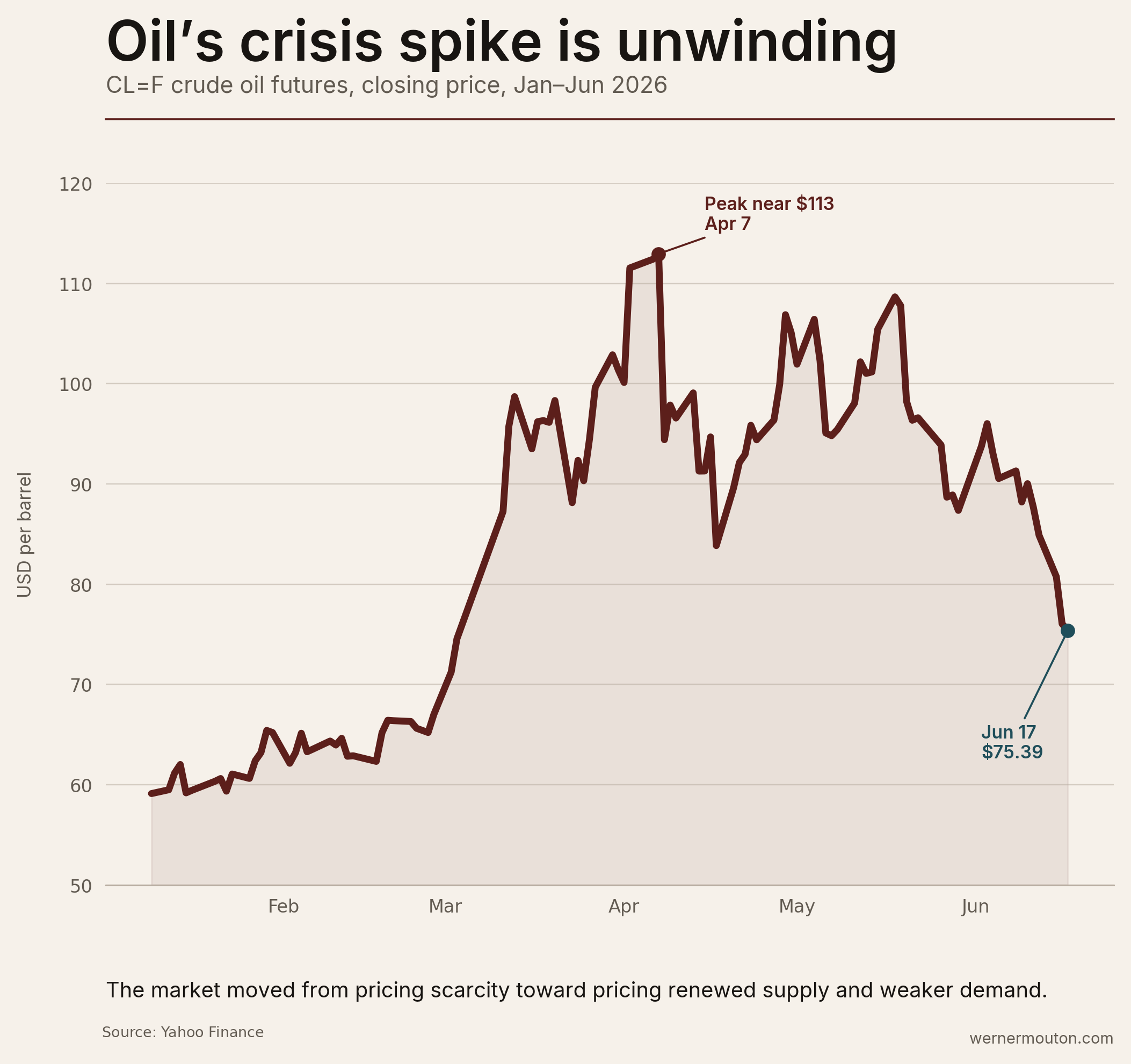
The oil spike unwinding
This is the deeper lesson. Efficiency is not the same as preparedness. A world that runs on narrow passages, lean inventories, just-in-time logistics, and cheap assumptions can look smooth until one route closes.
Then the hidden structure appears. Ships wait. Reserves fall. Prices jump. States discover that the market they trusted still depends on stored capacity, political restraint, and physical routes through dangerous water.
The crisis leaves fingerprints. Even if oil flows again, governments may remember the value of buffers.